
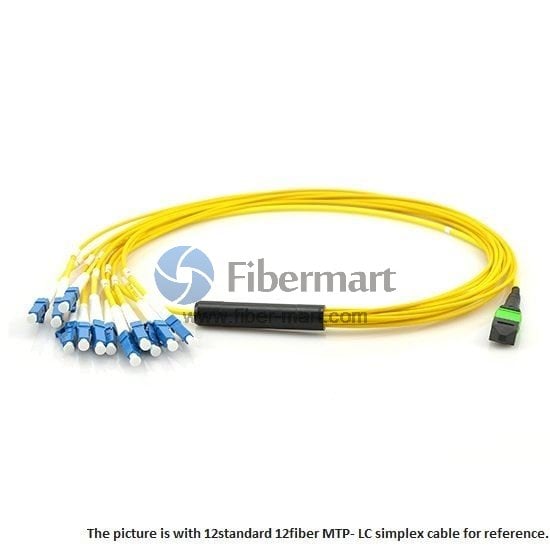
In modern data centers and enterprise networks, fiber optic cabling plays a critical role in ensuring high-speed, reliable connectivity. Two of the most common types of fiber cables in high-density environments are the LC to MPO cable and the MPO to LC fiber cable. While they may seem similar at first glance, understanding their distinctions is essential for proper network design and optimal performance. This article explores the differences, applications, and benefits of these cabling solutions, with a focus on the high-quality options provided by Fiber-mart mpo lc cable.
Understanding LC to MPO Cable
An LC to MPO cable is a type of fiber optic jumper designed to connect devices with LC connectors to a high-density MPO backbone. LC connectors are widely used in networking equipment like servers, switches, and transceivers due to their small form factor, low insertion loss, and high reliability. MPO connectors, on the other hand, are multi-fiber connectors capable of housing 12, 24, or more fibers in a single connector, which makes them ideal for high-density patch panels and backbone connections.
The LC to MPO cable effectively bridges the gap between standard LC-equipped devices and MPO-based network infrastructure. These cables are commonly used in environments where data centers require high-speed aggregation but maintain connections to devices with individual LC ports. They help reduce cable clutter, streamline installation, and simplify network management in complex setups.
Fiber-mart offers a wide range of LC to MPO cables with varying fiber types, including single-mode and multimode options. Their products are manufactured to meet strict performance standards, ensuring low insertion loss, high return loss, and compliance with international industry standards. Whether for short-range data center connections or long-distance backbone applications, Fiber-mart’s LC to MPO cables provide reliable and efficient solutions.
Understanding MPO to LC Fiber Cable
The MPO to LC fiber cable serves a similar but reversed purpose. In this case, the cable connects a high-density MPO backbone to individual LC ports on devices such as switches, servers, or optical transceivers. Essentially, it allows network engineers to break out an MPO trunk into multiple LC connections, enabling flexibility and scalability in network design.
These cables are particularly useful in high-density environments where multiple devices require connections from a single MPO trunk. MPO to LC fiber cables reduce the complexity of cabling and help maintain neat and organized racks. They are commonly used in breakout applications, patch panels, and pre-terminated fiber solutions, where quick deployment and minimal downtime are essential.
Fiber-mart provides MPO to LC fiber cables in a variety of configurations, including different fiber counts, lengths, and types. Their cables are designed to meet rigorous quality standards, offering excellent signal integrity and durability. With MPO to LC cables from Fiber-mart, network administrators can easily adapt high-density fiber infrastructure to support a variety of network devices, simplifying upgrades and expansions.
Key Differences Between LC to MPO and MPO to LC
While LC to MPO and MPO to LC fiber cables might appear interchangeable, they have distinct purposes and use cases. The primary differences include:
Connector Orientation
The most obvious distinction is the direction of connectivity. LC to MPO cables start with LC connectors and end with an MPO connector, while MPO to LC cables begin with MPO connectors and terminate in multiple LC connectors. This orientation determines how the cable is used within the network infrastructure.
Use Case
LC to MPO cables are primarily used to connect LC-based devices to an MPO backbone, effectively consolidating multiple LC connections into a single MPO link. In contrast, MPO to LC cables are often used for breakout applications, where a single MPO trunk is divided into individual LC connections to serve multiple devices.
Deployment Scenario
LC to MPO cables are ideal for uplinking servers, switches, or transceivers to a high-density backbone. MPO to LC cables are suitable for patching between high-density backbones and multiple device ports, especially in data centers with dense fiber distribution needs.
Fiber Management
By using the correct cable type, network engineers can optimize fiber management. LC to MPO cables reduce the number of cables in patch panels and simplify backbone connections, while MPO to LC cables make it easier to distribute connections to end devices without excessive cabling complexity.
Performance Considerations
Both cable types offer similar performance in terms of insertion loss, return loss, and bandwidth capacity, provided they are manufactured to high standards. However, choosing the wrong cable type for a specific application can lead to connectivity issues, increased insertion loss, and more complex troubleshooting.
Applications in Data Centers and Enterprise Networks
Data centers and enterprise networks benefit greatly from using both LC to MPO and MPO to LC cables. Some common applications include:
High-Speed Data Transmission
Both cable types support high-speed data transmission, including 10G, 40G, 100G, and beyond, depending on the fiber type and MPO configuration. This makes them essential for modern network infrastructures that demand high throughput and low latency.
Simplified Network Upgrades
When upgrading existing LC-based networks to a high-density MPO backbone, LC to MPO cables from Fiber-mart provide a seamless solution. Similarly, MPO to LC cables allow easy expansion of MPO trunks to multiple devices without overhauling existing connections.
Efficient Rack and Cable Management
Using the appropriate cable type reduces clutter in network racks and patch panels, improving airflow and making maintenance easier. Fiber-mart’s pre-terminated LC to MPO and MPO to LC cables further simplify installation and reduce labor costs.
Flexible Design
The flexibility of these cables allows network engineers to design networks that can scale easily. LC to MPO cables aggregate connections efficiently, while MPO to LC cables facilitate breakout applications for diverse device connectivity.
Choosing the Right Cable from Fiber-mart
Selecting the appropriate cable type depends on understanding the network architecture and connection requirements. Here are some tips for making the right choice:
Identify Device Connectors
Check whether the devices you are connecting have LC ports or require MPO connectivity. This will determine whether you need an LC to MPO or MPO to LC cable.
Consider Fiber Type and Count
Fiber-mart offers single-mode and multimode options, as well as different fiber counts in MPO configurations. Single-mode is suitable for long-distance connections, while multimode is ideal for shorter, high-bandwidth data center applications.
Determine Cable Length
Measure the distance between devices and backbone connections to choose the correct cable length. Fiber-mart provides custom-length cables to suit various deployment scenarios, minimizing slack and optimizing cable management.
Ensure Quality and Compliance
Always choose cables from a reputable supplier like Fiber-mart to ensure compliance with industry standards, low insertion loss, and long-term reliability. This reduces maintenance costs and improves network performance.
Conclusion
In summary, understanding the difference between LC to MPO and MPO to LC fiber cables is crucial for efficient network design and high-density deployments. LC to MPO cables are used to connect LC-equipped devices to an MPO backbone, while MPO to LC fiber cables break out MPO trunks into individual LC connections for multiple devices. Both types are essential in modern data centers, offering high-speed performance, scalability, and simplified cable management.
Fiber-mart provides a comprehensive selection of both LC to MPO and MPO to LC cables, manufactured to strict quality standards. Choosing the right cable type ensures reliable connectivity, streamlined installation, and future-proof network infrastructure. By leveraging Fiber-mart’s high-quality mpo lc cable options, organizations can achieve optimized performance, reduced downtime, and a cleaner, more manageable network setup.