
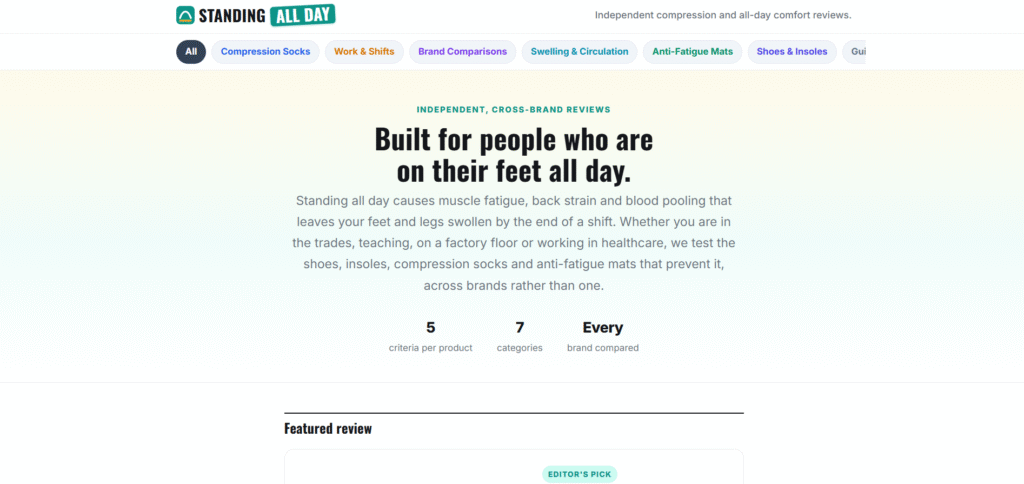
Many professions require people to stay on their feet for most of the day. A retail employee may spend hours helping customers, a chef may work continuously in a kitchen, and a healthcare professional may walk between patients throughout a long shift. For these workers, standing comfort isn’t a luxury—it can have a direct impact on how they experience their workday.
StandingAllDay.com is a valuable focus for discussing the everyday challenges of prolonged standing and practical ways to make long shifts more comfortable. With the right habits, workplace setup, and footwear, people can better manage the physical demands of being on their feet.
The Reality of Working on Your Feet
Standing for extended periods can be more demanding than many people realize. Even when you’re not walking, your body is constantly working to maintain balance and posture.
Your feet carry your body weight, while your legs and core help keep you stable. Over time, this can contribute to tiredness and general discomfort.
The workplace environment also matters. Hard floors, poorly fitted shoes, repetitive movements, and limited opportunities to rest can make a long shift feel even more challenging.
Comfortable Footwear Is Essential
If your job requires prolonged standing, footwear should be considered part of your work equipment.
Choose shoes that fit properly and are appropriate for the environment. A good pair should provide enough room for your toes and feel stable when you’re walking or standing.
Cushioning can be useful, but comfort is personal. A shoe that feels excellent for one person may not suit another person’s foot shape or work requirements.
Don’t Overlook Workplace Safety
Comfort should never come at the expense of safety.
Different jobs have different footwear requirements. Kitchens may require slip-resistant footwear, while warehouses or construction sites may require protective shoes or boots.
Before choosing new footwear, consider the actual hazards and requirements of your workplace.
Replace Worn-Out Shoes
Shoes don’t last forever.
Repeated standing and walking can gradually wear down soles and reduce cushioning. If your shoes are visibly damaged, unevenly worn, or no longer feel as supportive as they once did, it’s worth considering a replacement.
Keeping your footwear in good condition is a simple part of maintaining a comfortable routine.
Think About the Floor
The surface beneath your feet is another important factor.
Hard floors such as concrete and tile can become tiring when you’re standing for several hours. At fixed workstations, an appropriate anti-fatigue mat may provide additional cushioning.
A good workplace mat should be stable, easy to maintain, and suitable for the environment. It should also be positioned so it doesn’t create a trip hazard.
Change Your Position Often
One of the easiest habits to adopt is changing your stance throughout the day.
Don’t feel that you have to remain in exactly the same position. Shift your weight, move your feet, take a few steps, or change tasks when possible.
Small movements can break up repetitive periods of stationary standing.
Use Your Breaks Effectively
When you receive a break, consider what your body needs.
If you’ve been standing for hours, sitting down can provide a welcome change. You can also use the time to drink water and relax before returning to work.
If sitting isn’t possible, a short walk can still provide a different type of movement.
Pay Attention to Posture
Good posture isn’t about standing stiffly. It is about maintaining a balanced and comfortable position.
Avoid constantly leaning on one leg or locking your knees. Keep your shoulders relaxed and try to avoid unnecessary bending.
Your workstation should also be positioned so that you can complete common tasks without repeatedly twisting or reaching.
Create a Better Workstation
Small changes to your work environment can have a big impact when repeated every day.
Place frequently used equipment at a convenient height. Keep important supplies within easy reach. Where possible, adjust counters and work surfaces to suit your body.
The less often you need to bend, twist, or reach awkwardly, the easier your routine may feel.
Choose Socks Carefully
Comfortable socks can complement good footwear.
Look for socks that fit without creating tight pressure or bunching inside your shoes. In warmer environments, breathable materials can help improve comfort.
If you are considering compression socks because of a health concern, it’s sensible to get appropriate professional advice about whether they’re suitable for you.
Remember to Hydrate
Long shifts can make it easy to forget about drinking water.
Keep water accessible when your workplace permits it, particularly if you’re working in a hot environment. Your individual fluid requirements depend on factors such as temperature, activity level, and personal circumstances.
Hydration should be considered part of your overall workday routine.
Recovery After Work Matters
Once your shift ends, your feet and legs may need time to recover.
Take off your work shoes and allow yourself some time to relax. Comfortable footwear at home can also be useful if walking around barefoot feels uncomfortable.
Gentle stretching or movement may be appropriate if it feels comfortable, while persistent pain should be discussed with a healthcare professional.
Listen to Your Body
A little tiredness after a long shift isn’t unusual. Persistent pain is another matter.
If symptoms continue, become more severe, or interfere with your normal activities, don’t simply assume that standing is the only explanation. A healthcare professional can help determine what may be causing the problem.
Sudden or significant symptoms should receive appropriate medical attention.
Make Comfort a Daily Habit
The biggest benefit often comes from consistency.
Instead of waiting until your feet hurt before making changes, build good habits into your normal routine. Wear suitable footwear, keep your workstation organized, change positions regularly, take appropriate breaks, and allow enough recovery time.
These habits are simple, but they can make a demanding workday feel more manageable.
StandingAllDay.com as a Practical Resource
The focus of StandingAllDay.com naturally connects with a wide range of topics, including work footwear, standing desks, anti-fatigue solutions, posture, workplace ergonomics, movement, and recovery.
For people who spend most of their day standing, practical information can help them make better choices based on their particular occupation and environment.
There isn’t a single strategy that works for everyone. The best approach is usually a combination of several sensible habits.
Final Thoughts
Working on your feet can be physically demanding, but there are practical ways to improve everyday comfort. Start with properly fitted footwear, consider your standing surface, move regularly, maintain a balanced posture, and use breaks to change position.
StandingAllDay.com provides a strong focus for exploring these topics and helping people understand the realities of long hours on their feet.
A comfortable workday isn’t about finding one perfect solution. It’s about making small, consistent improvements that support your body throughout the entire shift.