
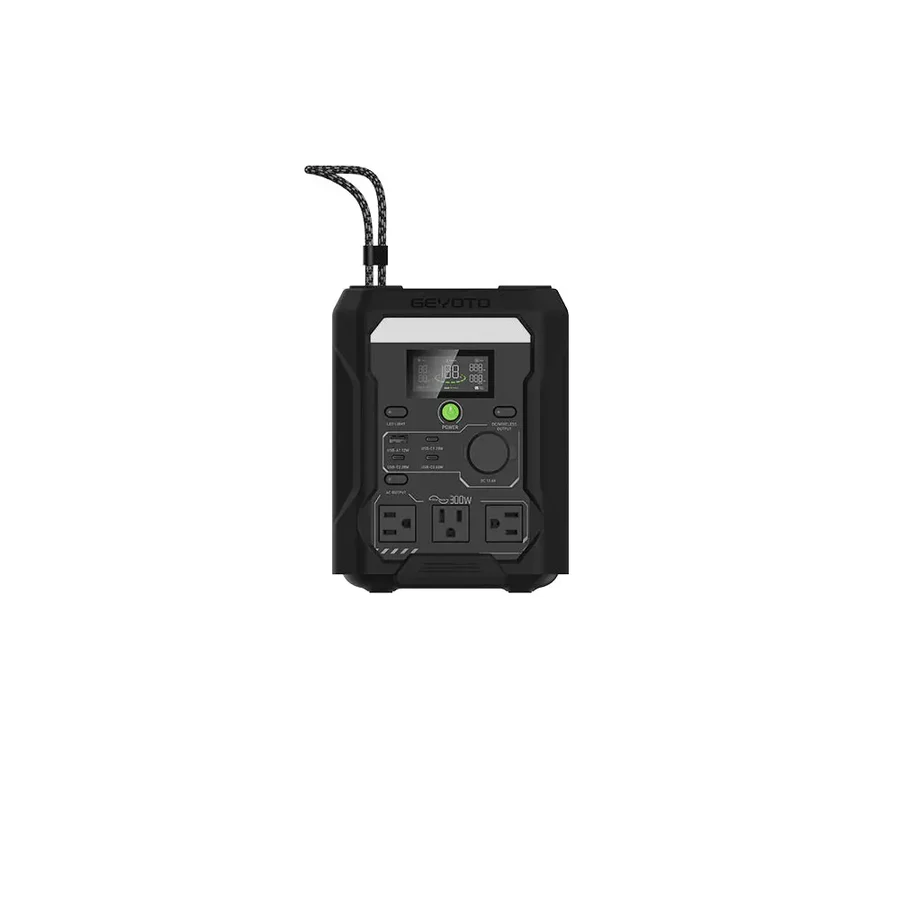
Camping is a great way to disconnect from busy routines and spend time outdoors, but modern campers often still need reliable electricity. Whether you want to charge smartphones, power lights, run a portable refrigerator, operate a CPAP machine, or keep small appliances working, a portable power station can make outdoor adventures more convenient. However, choosing the right model requires more than simply looking at battery size. Capacity, portability, output power, charging options, and runtime all influence whether a power station will meet your needs.
If you are researching how to choose a portable power station for camping, the best approach is to consider your actual energy requirements first. A compact power station may be ideal for a weekend trip with basic electronics, while longer camping adventures may require a much larger battery and stronger inverter. Understanding the most important specifications can help you make a practical choice without carrying unnecessary weight.
Start by Calculating Your Camping Power Needs
The first step in learning how to choose a portable power station for camping is identifying the devices you plan to use. Make a simple list of everything you expect to connect to the power station. Common camping devices include smartphones, tablets, cameras, laptops, LED lights, portable fans, mini refrigerators, electric blankets, and cooking equipment.
Each device consumes a different amount of electricity. Small electronics generally require relatively little power, while heating appliances and refrigeration equipment can consume considerably more. Check the wattage listed on each device or its power adapter. If the wattage is unavailable, look for the information in the manufacturer’s specifications.
Once you know the wattage, estimate how many hours you will use each device per day. Multiplying wattage by hours gives you an approximate daily energy requirement in watt-hours. For example, a 10-watt light used for five hours consumes approximately 50 watt-hours. Adding the estimated consumption of all your devices gives you a better idea of the battery capacity you need.
Understand Battery Capacity and Watt-Hours
Portable power station capacity is commonly measured in watt-hours, or Wh. This number indicates approximately how much energy the battery can store. A power station rated at 500Wh theoretically stores more energy than one rated at 250Wh, although actual usable energy will vary because of inverter efficiency and other losses.
For short camping trips where you mainly need to charge phones, cameras, and small lights, a lower-capacity unit may be sufficient. If you plan to power a portable refrigerator, laptop, or several devices for multiple days, you may want a larger capacity.
It is also important not to choose a battery solely because it has the highest capacity. A very large battery can be heavier, more expensive, and harder to transport. The goal is to find a balance between sufficient energy storage and practical portability.
Consider the Power Station’s Portability
Portability is one of the most important factors for campers. A power station may have excellent capacity, but if it is too heavy to carry comfortably, it may not be suitable for your particular trip.
Think about how you will transport the unit. If you are driving directly to a campsite, a heavier model may not be a major concern. However, backpackers and hikers need lightweight equipment that can be carried over long distances.
Look at the unit’s weight, dimensions, carrying handles, and overall design. Some models are compact enough to fit inside a vehicle or tent without taking up much space. Others are designed for larger energy demands and may require two people to move comfortably.
Portability also involves how easily you can access the ports and controls. A well-designed power station should allow you to connect devices without awkward positioning, especially when used inside a tent, camper, or outdoor shelter.
Check the Output Ports
The number and types of ports can significantly affect your camping experience. Before purchasing a power station, consider which devices you need to connect simultaneously.
USB-A and USB-C ports are useful for smartphones, tablets, cameras, and other small electronics. AC outlets can power standard household-style devices, while DC outputs may be suitable for certain camping equipment and vehicle accessories.
If you plan to use several devices at once, check both the number of available ports and the maximum combined output. Having multiple ports does not necessarily mean the power station can operate every connected device at full capacity simultaneously.
USB-C Power Delivery can also be valuable for campers who rely on newer laptops and electronics. It may allow compatible devices to charge directly without requiring the AC inverter, potentially improving efficiency.
Pay Attention to Continuous and Peak Output
Battery capacity tells you how long a power station can provide energy, but output wattage determines whether it can operate a particular device.
Continuous output refers to the amount of power the inverter can provide consistently. Peak or surge output refers to the higher level of power that may be available briefly when certain appliances start.
Devices with motors, compressors, or heating elements can require significant power when starting. A portable refrigerator, for example, may have a startup surge that is higher than its normal operating consumption. Therefore, check both the continuous and peak output specifications before purchasing.
Choosing a power station with an inverter that cannot handle your equipment may result in overload protection activating or the device failing to operate properly.
Estimate Real-World Runtime
Runtime is another essential consideration when deciding how to choose a portable power station for camping. The theoretical battery capacity does not always equal the energy available to your devices.
Power stations lose some energy during the conversion process, particularly when using AC outlets. A rough calculation can be made by multiplying battery capacity by an estimated efficiency factor, then dividing the result by the device’s wattage.
For example, a 500Wh power station may not deliver the full 500Wh to an AC-powered device because of conversion losses. Actual runtime will depend on the power station, connected equipment, temperature, battery condition, and usage patterns.
If you want to maximize runtime, use energy-efficient devices whenever possible. LED lighting, efficient fans, and direct USB charging can reduce unnecessary energy consumption.
Think About Charging Options
A good camping power station should offer convenient ways to recharge. Many models can be charged from a wall outlet before your trip, while others support vehicle charging or solar panels.
Solar charging is particularly useful for extended camping trips. With suitable sunlight and compatible solar panels, you may be able to replenish the battery during the day and use stored energy at night. However, solar charging speed depends on panel wattage, weather conditions, sunlight intensity, and the power station’s solar input limits.
Vehicle charging can also be helpful during road trips. If your battery becomes depleted, you may be able to recharge it while driving, depending on the power station and charging equipment.
Consider Battery Chemistry and Lifespan
Battery technology affects weight, lifespan, safety, and overall value. Lithium iron phosphate, commonly known as LiFePO4, has become popular in many modern portable power stations because of its long cycle life and strong durability.
When comparing models, check the manufacturer’s information about expected battery cycles and warranty coverage. A power station with a higher initial price may provide better long-term value if its battery is designed to withstand frequent charging and discharging.
Temperature performance is also worth considering if you regularly camp in very hot or cold environments. Extreme temperatures can affect battery performance, so review the manufacturer’s recommended operating conditions.
Choose Features That Match Your Camping Style
Extra features can improve convenience, but they should not replace the fundamentals of capacity and reliability. Some power stations include displays showing battery percentage, input and output wattage, estimated runtime, and charging status. These features can make it easier to manage energy during a trip.
Other models may offer smartphone applications, multiple charging methods, built-in lighting, or wireless connectivity. Such features can be useful, but they may not be necessary for every camper.
Think about your priorities. A minimalist camper may prefer a simple, lightweight unit, while a family camping group may benefit from a larger model with multiple outlets and greater capacity.
Make Safety and Reliability a Priority
A portable power station should be treated as an important electrical device. Look for models from reputable manufacturers with clear specifications, safety protections, and appropriate certifications for your market.
Features such as overcharge protection, short-circuit protection, temperature monitoring, and overload protection can provide additional peace of mind. Always follow the manufacturer’s instructions and avoid using damaged cables or incompatible accessories.
Keep the power station protected from rain and direct exposure to water unless it is specifically designed for such conditions. Good ventilation is also important when using equipment that generates heat.
Find the Right Balance for Your Trip
Ultimately, learning how to choose a portable power station for camping is about matching the equipment to your specific needs. Start by calculating your expected energy consumption, then consider battery capacity, output power, runtime, portability, charging options, and durability.
For short trips with basic electronics, a compact power station may offer the best combination of convenience and portability. For family camping, extended stays, or equipment with higher energy demands, a larger-capacity model may be more appropriate.
The ideal power station is not necessarily the biggest or most powerful option available. It is the one that provides enough energy for your essential devices while remaining practical to transport and recharge. By carefully comparing your camping requirements with the specifications of different models, you can select a power station that supports your outdoor adventures without adding unnecessary weight or expense.